
ML SHIFT PREDICTIONS
Smart shifts for optimized scheduling
PROBLEM STATEMENT
We discovered that users were spending between 25% and 50% of their time in the app simply posting shifts—and another 25% to 50% canceling them. The process required multiple clicks and repetitive steps, creating unnecessary friction and frustration for facility operators.
Many users were overposting shifts to avoid being understaffed, then canceling the extras at the last minute. This not only created inefficiencies but also caused frustration for healthcare workers who had accepted those shifts. The behavior pointed to deeper workflow issues rather than just a lack of discipline or organization.
SURVEY
Initially, we assumed cancellations were due to double-bookings when internal staff picked up shifts. However, survey results revealed the top reason was actually changes in patient census—a finding that completely shifted our understanding of the problem. This insight prompted us to rethink our approach and design for prediction, not punishment.

OPPORTUNITY SOLUTION TREE
Rather than penalizing users for canceling shifts, we explored how to help them post the right shifts from the start. I created an opportunity solution tree to visualize different paths toward improving prediction and efficiency, reframing the focus from reactive to proactive decision-making.

PERSONAS & JOBS TO BE DONE
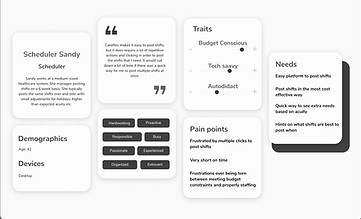
To ground the work in real user needs, I developed personas and Jobs-to-Be-Done statements for both facility operators and internal CareRev teams. These frameworks helped me empathize with the motivations behind their actions and ensure that each design decision served a meaningful job for the user.



COMPETITIVE ANALYSIS
I analyzed how other products surface AI and machine learning suggestions, identifying best practices for clarity, trust, and user control. These examples guided early concepts for how predictive insights could be introduced seamlessly into the existing workflow.

WIREFEAMES & ITERATIONS
With the research in place, I created wireframes and began socializing early ideas across teams. Through sessions with engineers, client-facing teams, and users, we iterated on the flow to ensure technical feasibility, usability, and alignment with business goals.

HANDOFF
Once we validated the final approach through usability testing, I refined the designs and prepared them for developer handoff. I remained closely involved during implementation, providing design support and ensuring that the user experience carried through seamlessly from prototype to product.
